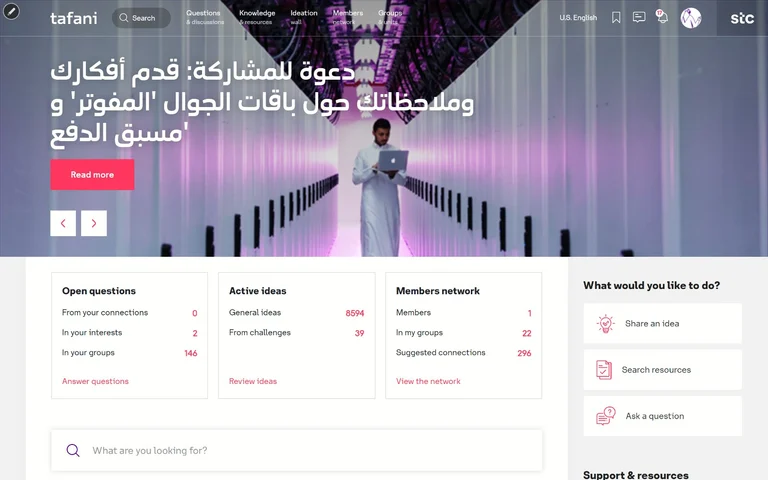
STC: Tafani, a Verint Community intranet where its people ask, share and put forward ideas
4 Roads built Tafani, STC's intranet on Verint Community: questions and discussions, ideation challenges, surveys and knowledge, on 54 custom widgets.

Augmented reality
4 Roads built Project Sight for Hitachi Vantara in under two months: augmented reality for customers to maintain their own hardware, shown at Hitachi NEXT.
The brief
Hitachi Vantara, part of the Hitachi Group, focused mainly on high-value contracts with a small number of enterprise clients. Each had a dedicated account and support team: their hardware was maintained before anything went wrong, and issues were fixed with little or no interruption.
Hitachi Vantara wanted to grow with mid-market customers too, which meant a fundamental change in what it offered. Mid-market contracts are smaller and come in greater numbers, so to enter that market profitably it could not give these customers a dedicated support team. They would need to diagnose hardware faults, and fix what they could, themselves.
Hitachi Vantara wanted to find out how augmented reality could help them do that and still give them a great experience. That became Project Sight.
It needed a partner to bring its product range to life in a new way, and gave Project Sight to 4 Roads on the strength of the Virtual Rack Configurator, which 4 Roads had delivered for it before and which won a BIMA award in 2019. Project Sight was the augmented reality 4 Roads added to it afterwards.
The idea
4 Roads saw that augmented reality could turn real-time data points into pictures. That lets Project Sight show more about Hitachi Vantara's hardware, in a way that was not possible before.
It shows the data simply, so that it can be understood at a glance: a key part of persuading customers to maintain their own hardware.
Project Sight covers two situations: someone on site, in front of the rack, and someone who isn't.
On site
The rack carries a QR code. Pointing a device at it launches the Project Sight app, which is connected to several third-party systems that monitor the hardware's performance, and shows in augmented reality how the rack is performing while the person stands in front of it.
There is nothing to tap. The person just points the device at the QR code, and does not need to get close to it.
Hardware performance
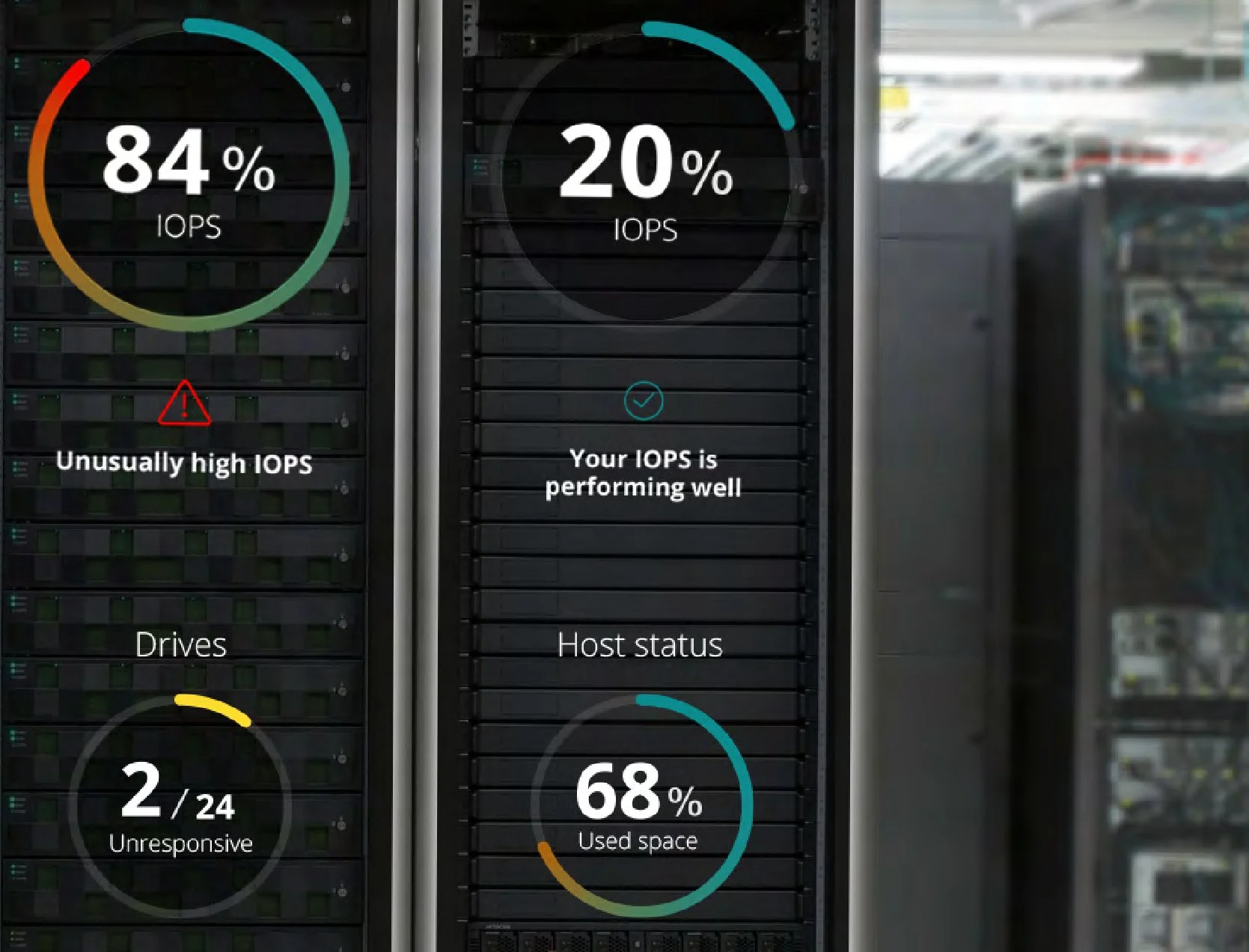
Users see the status of the hardware they choose, colour-coded by key indicators, so they can check at a glance whether it is running smoothly. That speeds up maintenance considerably.
Guided maintenance
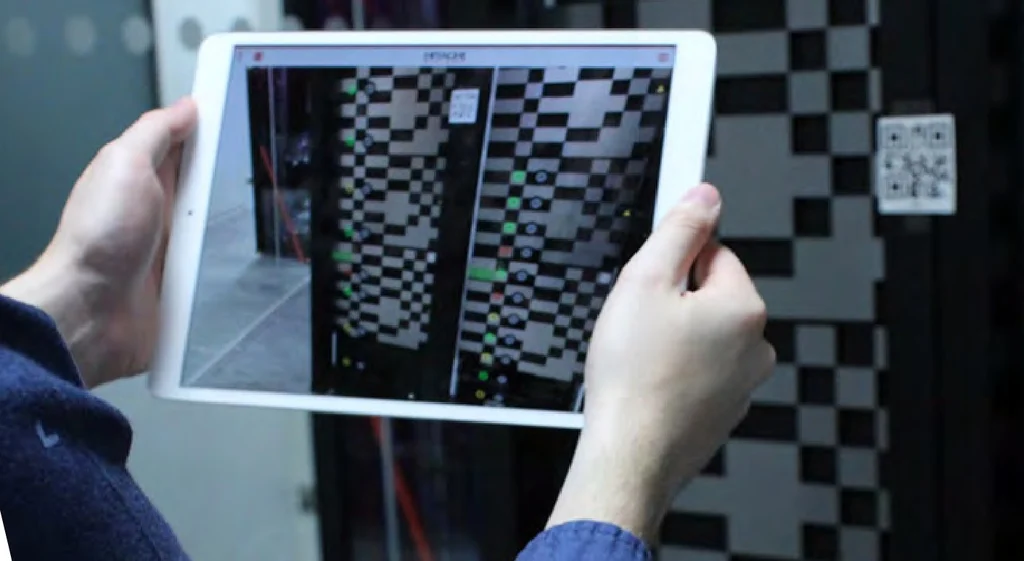
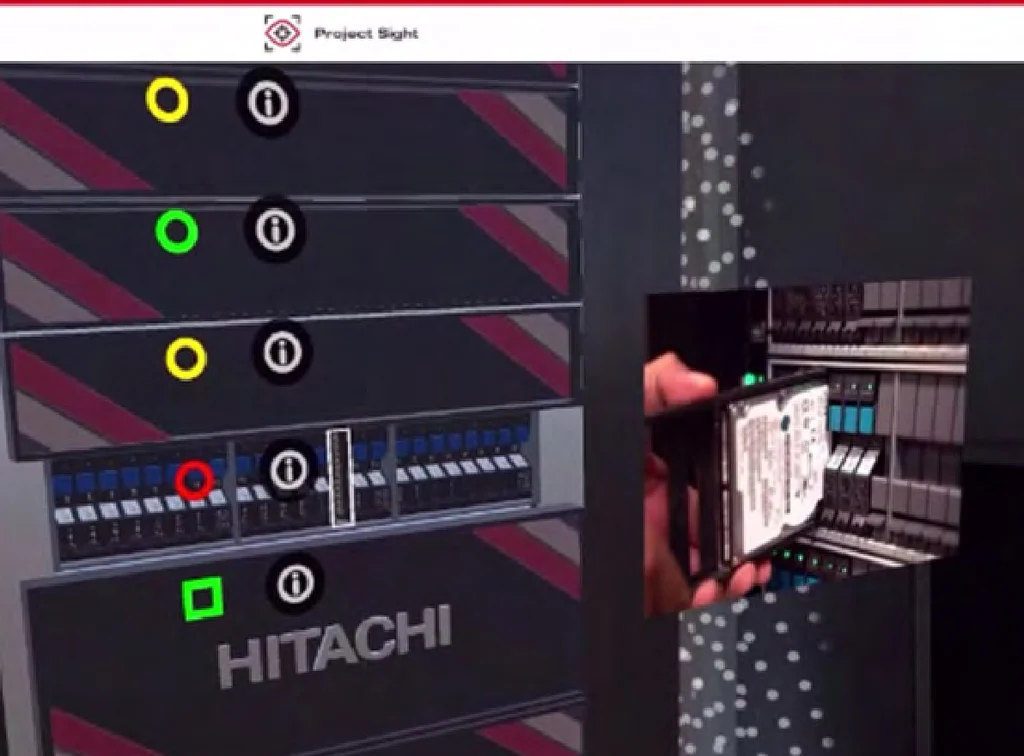
Guided maintenance lets mid-market customers without full Hitachi support maintain their hardware with minimal risk, and gives them live guidance while they do it.
4 Roads put videos in the user's field of view to guide them through complex steps, such as unmounting the correct drive before removing it. Hitachi's customers and partners can both use it.
Thermal performance
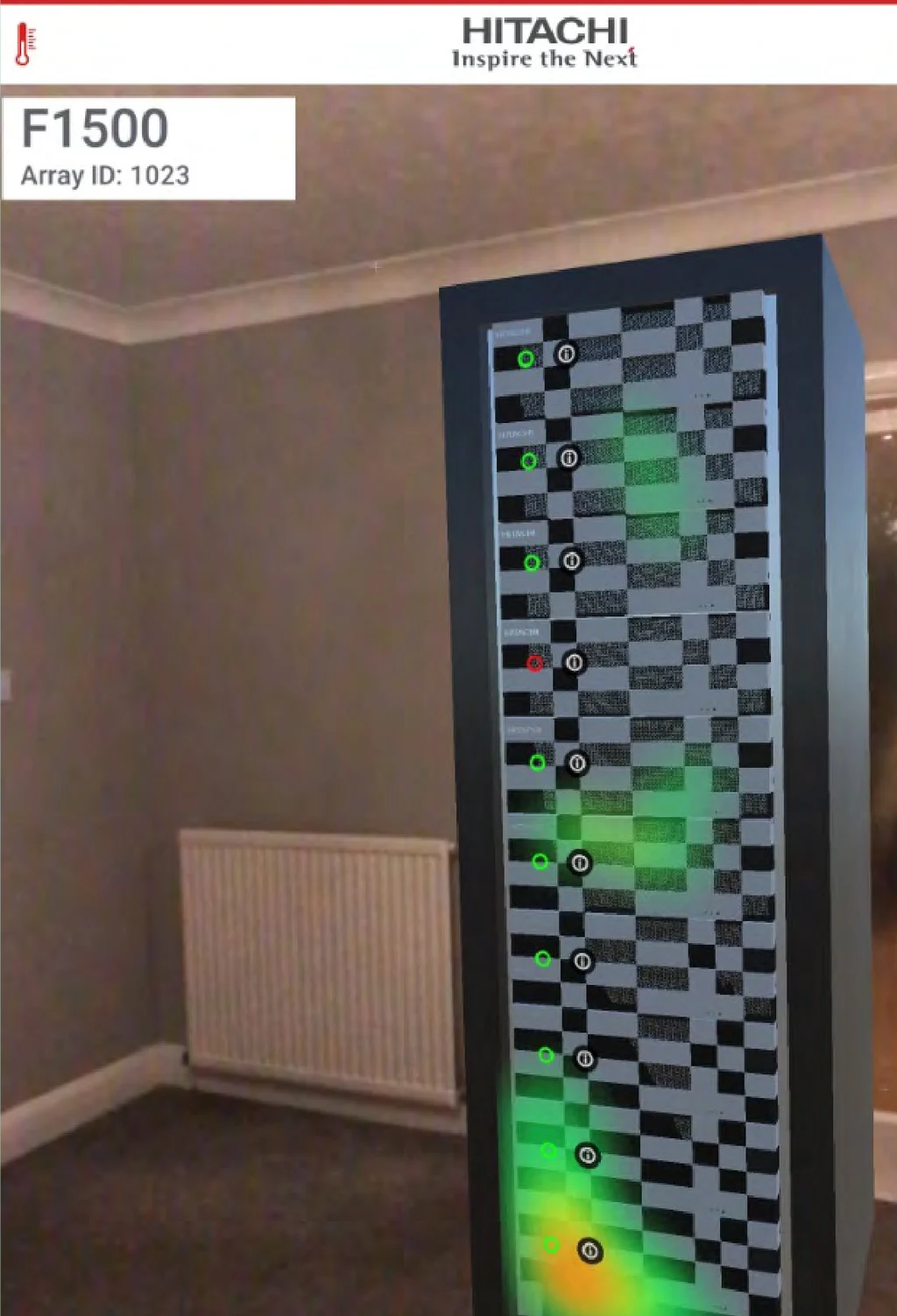
Cooling that underperforms causes small problems that build up over time and end in unwanted throttling: the hardware slowing itself down.
Project Sight takes the thermal data from the servers and shows technicians a 3D heat map of the rack, in real time. No special camera is involved: the picture is built from the rack's own information.
Technicians get a much better understanding of how heat is spread through a rack, and customers who monitor their own hardware get an easy way to find equipment that is overheating.
Away from the rack
For a CIO or CTO who isn't on site, Project Sight shows their racks in 3D, and lets them interact with the hardware virtually.
Its library lists the arrays they have saved, and they add to it to build up a library of the arrays they look after. They can choose from five arrays and place any of them in the room around them.
Through the device's camera, a white marker shows where an array can go as they move around, and several arrays can be placed at once.
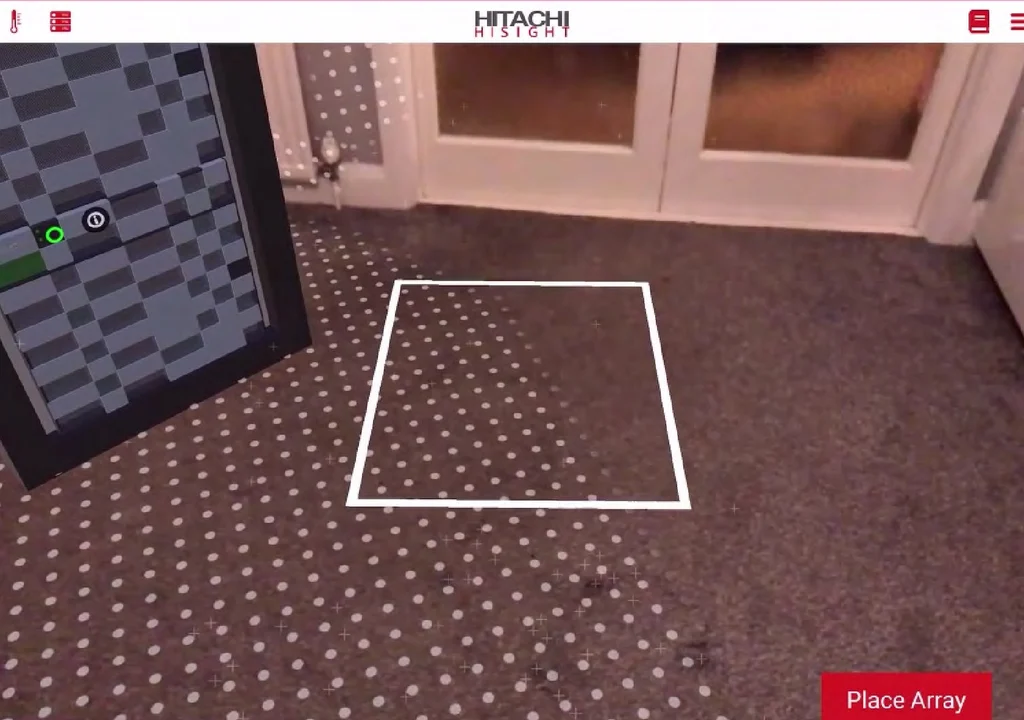
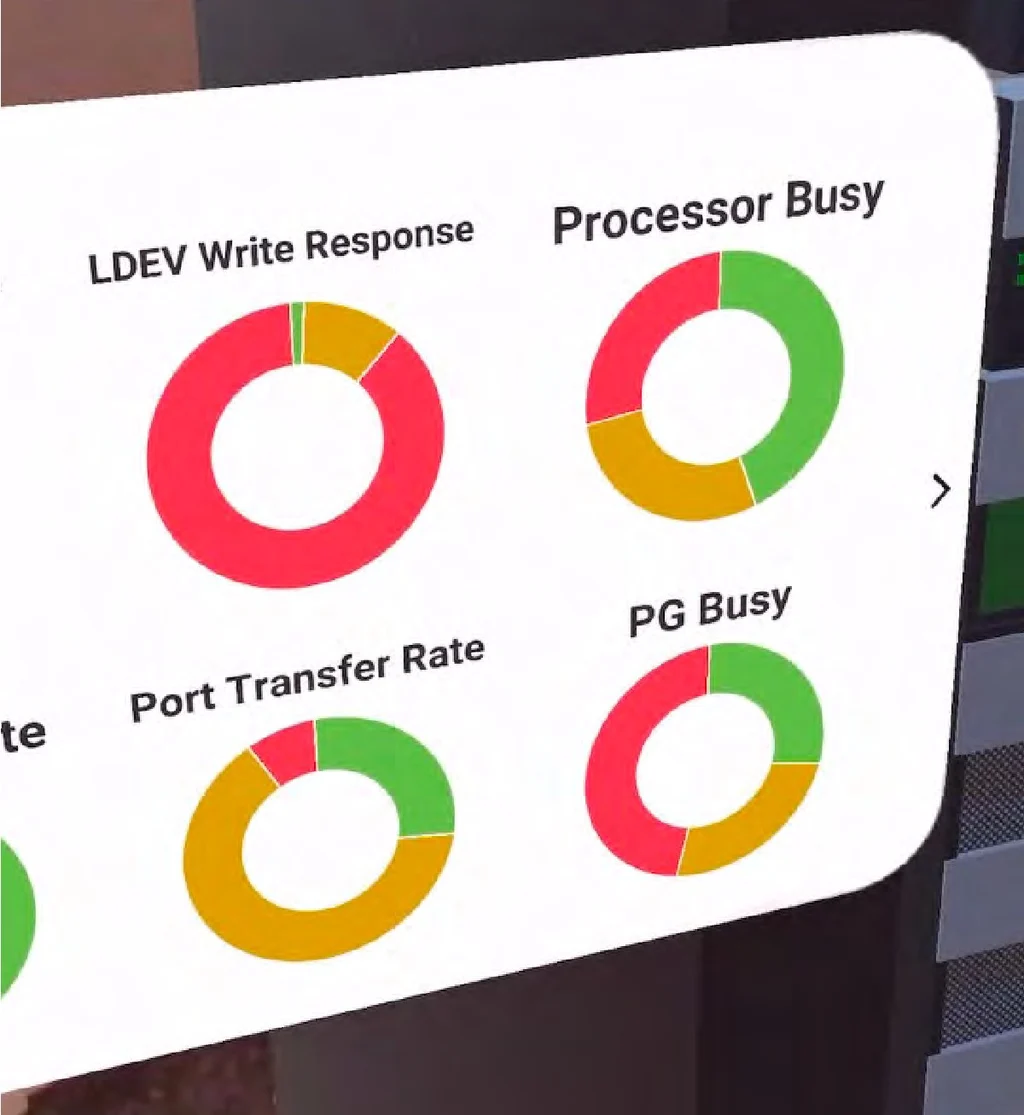
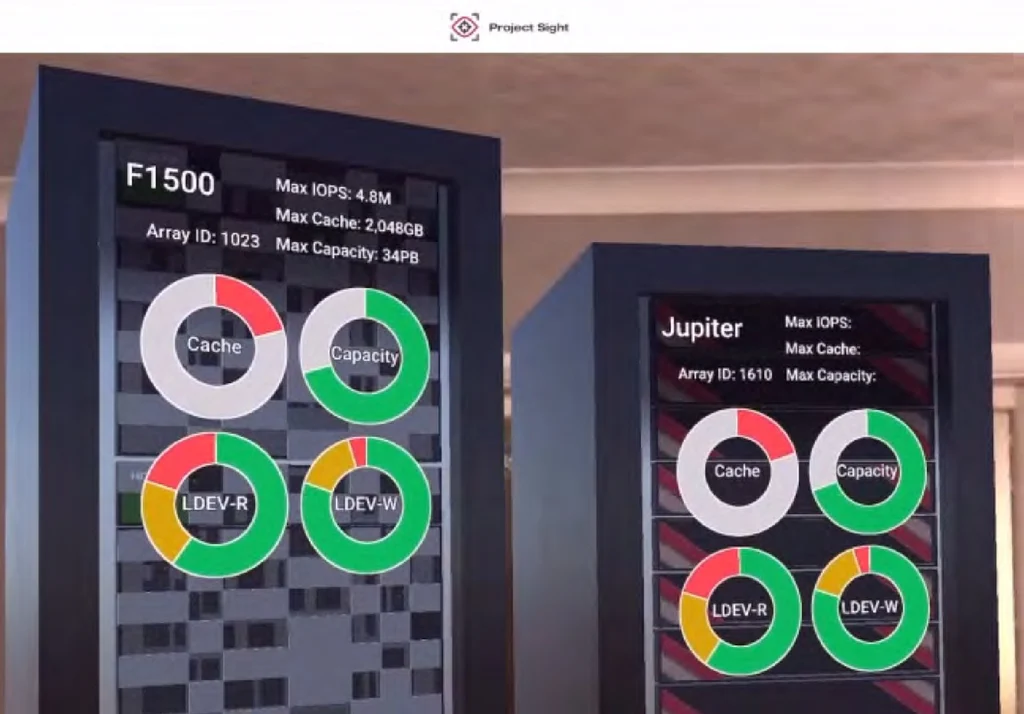
Once an array is placed, using it is the same as standing in front of the physical rack: scan its QR code to see a full diagnostic dashboard of metrics for that server.
Results
Project Sight was showcased at Hitachi NEXT 2019, Hitachi's global conference, and presented in several high-profile executive keynotes.
Feedback from customers and analysts was overwhelmingly positive. In an industry where it is hard to stand out, Project Sight showed that quite a traditional business could innovate with augmented reality, the kind of thing that interests customers, partners and analysts alike.
Project Sight was a proof of concept. With that feedback, the immediate aim was to roll it out across the business.
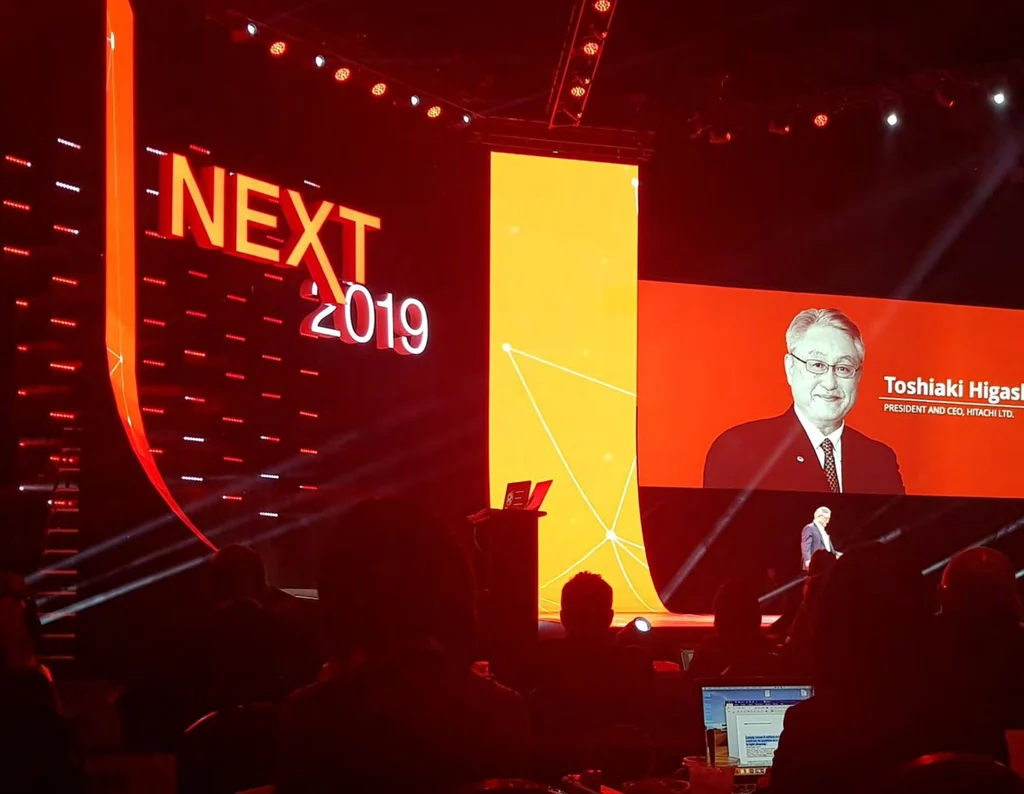
Built in under 2 months, then shown at Hitachi NEXT 2019 and in executive keynotes
Tell us what your customers are trying to do, and we will start from there.

Speak to Rob (we can't promise he won't be on his bike)
4 Roads built Tafani, STC's intranet on Verint Community: questions and discussions, ideation challenges, surveys and knowledge, on 54 custom widgets.
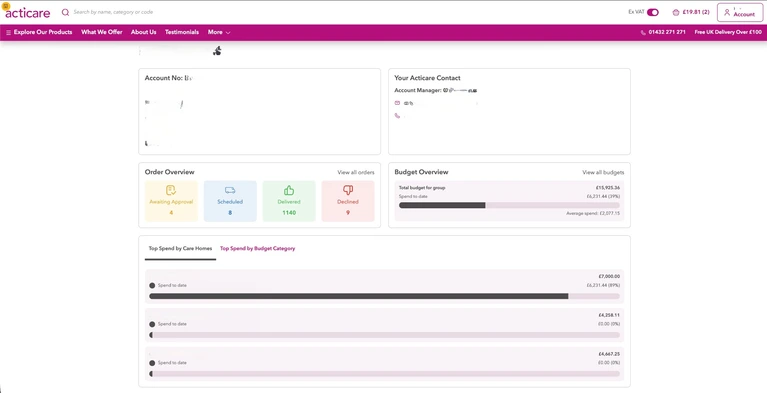
4 Roads replaced Acticare's ecommerce platform with a B2B system linked to OGL and MaxOptra: budgets, approvals, preferred products and self-service.